Remembering Srebrenica – 30th Anniversary of Srebrenica Genocide – Remember yesterday, act today

2025 Memorial Day

30-Year Anniversary of
the Srebrenica Genocide

Ministry of Housing, Communities and Local Government logo
Foreign Office logo
BiH UK Network logo

“By remembering the pain of the past and learning its lessons, we can together resolve that it must never happen again. This is why the work of organisations such as Remembering Srebrenica is so vitally important.”

HIS MAJESTY KING CHARLES III

The Rt Hon David Lammy MP

Secretary of State for Foreign, Commonwealth and Development Affairs

Thirty years on from the genocide of Srebrenica we remember and mourn the more than 8,000 people who lost their lives.

And we remember the survivors too – the many thousands who lost loved ones, who were displaced, and those who endured and survived sexual abuse. Their lives and their suffering must not – will not – be forgotten.

As we recall the terrible events of 1995, it is right that we also pay tribute to those who, to this day, continue to fight for justice, to promote peace, security and reconciliation, and work to eliminate prejudice and discrimination.

We salute the commitment of organisations such as Remembering Srebrenica in the UK and the Srebrenica Memorial Centre and Mothers of Srebrenica in Bosnia and Herzegovina to ensure the horrors of the past are not repeated; that lessons are learnt and acted upon for a better future.

‘Their lives and their suffering must not – will not – be forgotten.’

The Remembering Srebrenica theme for 2025 ‘Remember Yesterday, Act Today’ is apt. As we commemorate victims and survivors, it is imperative that we reflect on our responsibilities in a volatile world, and re-double our efforts to promote peace and security in the Western Balkans region and beyond.

As BiH itself faces its greatest crisis in 30 years, I reiterate the UK’s commitment to the stability, security and territorial integrity of Bosnia and Herzegovina and support to those who seek a brighter and better future for all of its people.

David Lammy, official portrait ©House of Commons
Remembering Srebrenica – 30th Anniversary of Srebrenica Genocide – Remember yesterday, act today

Introduction by Dr Waqar Azmi OBE

Chair and Founder of Remembering Srebrenica UK

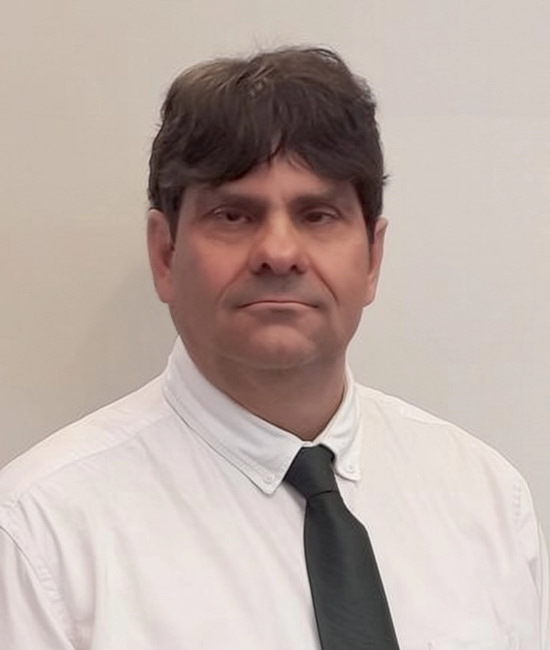
Dr Waqar Azmi OBE, photographed in May 2025

In July 1995, the world witnessed the worst atrocity on European soil since the Second World War. In the small town of Srebrenica alone, 8,372 men and boys were systematically murdered in a matter of days – solely because they were Muslim. Across Bosnia and Herzegovina, more than 100,000 people were killed, over 50,000 women and girls subjected to sexual violence, and more than 2,000,000 people forced from their homes. We believed that the horrors of concentration camps were confined to history. Yet in 1990s Bosnia, they returned – while much of the world looked away.

Remembering Srebrenica UK was founded to ensure that the Bosnian genocide is never forgotten. We honour the memory of the victims and stand in solidarity with survivors who continue to live with the trauma of unimaginable loss. This year’s remembrance carries special weight. 2025 marks 30 years since the genocide in Srebrenica – a solemn milestone that invites not only reflection, but renewed resolve. Because remembrance is not just about the past – it is a call to action for today, and a commitment to justice and peace for tomorrow.

Once again, we see the flames of sectarianism being stoked by extremist politicians in parts of Bosnia and Herzegovina. Elsewhere, the world watches the horrors taking place in Gaza and calls for ethnic cleansing to “purify Gaza” by extremist politicians continue with impunity.

Though we in the UK are spared the horrors of war, we are not immune to hatred. Hate crimes are rising. Mosques, immigrants, and Muslim communities were targeted in particular during last year’s riots. Too many of our fellow citizens still face hatred, discrimination and abuse – simply for who they are.

We therefore urge leaders to uphold their commitments to human rights and the rule of law – without exception. And we reaffirm our own promise: to learn the lessons of Srebrenica, to stand against hatred, and to build stronger, safer, and more cohesive communities here at home.

It is my privilege to lead Remembering Srebrenica UK. I am deeply grateful to our 1,500 community champions, our eight English regional boards, and our country boards in Northern Ireland, Scotland, and Wales. I also thank our small but tireless team whose dedication drives everything we do.

Finally, I want to thank His Majesty’s Government for its continued support. Your support is vital as we seek to Remember Yesterday, and Act Today.

The Srebrenica Genocide

Humanity has lived through the darkest times, but few have stained our collective soul more than the Srebrenica genocide.

It seems unbelievable that, just thirty years ago, an inhuman plan could be hatched for ethnic cleansing in Europe, with more than 8,000 Bosnian Muslim men and boys systematically and industrially murdered during the Bosnian War.

Equally astounding was the Army of Republika Srpska’s success in co-opting civilians to secure its brutal goals through a carefully planned process of dehumanising Bosnian Muslims, that made it easier for murderers and collaborators to hunt and kill their ‘enemy’.

Dehumanisation leading to genocide is not new. In Nazi Germany, Jews were labelled as sub-human and likened to vermin. Hutu killers in Rwanda referred to Tutsi victims as cockroaches. Stripped of possessions, livelihoods, dignity and their essential humanity, Bosnian Muslims suffered a similar fate.

Described by the United Nations as ‘the worst crime on European soil since the Second World War’, the massacres at Srebrenica were classed as genocide by both the International Court of Justice and the International Criminal Court for the former Yugoslavia.

Yet denial of this atrocity remains widespread. Particularly concerning is the way some Bosnian Serb political leaders are again using genocide denial to threaten the integrity of Bosnia and Herzegovina as a state with equal rights for all, irrespective of their different ethnicities or religious identities.

The lessons learned from Srebrenica are that hatred and intolerance can flourish if left unchallenged. Even in Bosnia and Herzegovina, where people of different faiths had lived peacefully together for many years, an integrated society disintegrated.

In 2024, the United Nations General Assembly declared 11th July the official day of remembrance for the victims of Srebrenica. On this day each year, we honour the victims and survivors of the Srebrenica genocide. We pledge ourselves to combat hate wherever it rears its head, and to work for a better, stronger and more cohesive society here in the United Kingdom.

These must be no empty pledges. We are committed to ensuring that people understand the horror that can be unleashed should we fail in our aim. The Srebrenica genocide is truly the darkest moment of European history since the Second World War.

Thousands of innocent lives were taken in the name of nationalistic pride, often simply because their family names marked them out as Muslims. Horrifyingly, though, 30 years on, hatred, prejudice and genocide continue to threaten the lives of millions of people across the world.

We must all understand the consequences of leaving hatred and intolerance unchallenged. By confronting these twin evils, we give ourselves hope of illuminating the darkness and creating a better, safer and stronger society for all, at home and overseas.

2025 THEME

Remember Yesterday,
Act Today

Every year we select a theme that reflects an aspect of the genocide that needs to be commemorated, but that also speaks to communities here in the UK.

For a milestone such as the 30th anniversary, this takes on an even deeper meaning and importance. The theme for 2025 is ‘Remember Yesterday, Act Today’.

At the heart of this is a clear message about the reflective remembrance alongside proactive action to safeguard against intolerance and hatred. Doing so will allow us to work towards a more cohesive and resilient future for communities in the UK.

‘Learn from the past… for the future.’

Munira Subašić, survivor, President of the Mothers of Srebrenica

Events of 1995 may seem far removed from today’s world, but they could not be more relevant.

At a time when the threat of ethnic prejudice and extreme nationalism is again rearing its head in parts of Bosnia and Herzegovina and the threat of genocide continues to kill thousands of innocent people in other parts of the world, the Srebrenica Prayer remains a message for our time.

Each of us has a responsibility to challenge such hatred in today’s world. But doing so is not easy, and we can learn so much from the courage of the late Jovan Divjak.

General Divjak was an ethnic Serb in the Yugoslav National Army (JNA). But early in the war he took the decision to join the multi-ethnic Bosnian Army, where he was one of only two non-Bosniak senior officers. He said “I had decided to stand on the side of Bosnian citizens. I did not act from a political standpoint… but to help Bosnian citizens to stand up and to resist the aggression… I felt it was my moral obligation to stand with those who were in danger.”

Here in the UK too, it is vital that we stand against all forms of hate and prejudice. By learning the lessons from Srebrenica, we build each other up so that through our actions – however big or small – we can collectively make a difference and create
communities based on empathy, kindness and compassion.

As we come together this year to mark the 30th anniversary of the Srebrenica genocide, let us all pledge to ‘Remember Yesterday, Act Today’.

The Srebrenica Prayer

We pray to Almighty God,
May grievance become hope!
May revenge become justice!
May mothers’ tears become prayers
That Srebrenica
Never happens again
To no one and nowhere!

Munira Subašić

Survivor of the Srebrenica Genocide and President of the Mothers of Srebrenica

I am Munira Subašić, and I survived the genocide in Srebrenica where more than 22 of my close relatives were killed, including my husband and son – whom I loved the most in this world.

Munira Subašić

It is hard to describe the pain that I have been carrying for 30 years. Our innocent children were killed in the UN protected zone while the world watched. They were killed because their names marked them out as Muslims. Although we survived the genocide, denial of it is rife – which causes immense pain.

After July 11th 1995, more than 5,500 children remained without one or both of their parents. They watched their fathers being taken and killed. Many of their mothers and sisters were raped and some were killed too. Some of those children were born right after the genocide and they do not have a single photograph of their fathers. They often ask us if they resemble their fathers. We often tell them that they do because their fathers are a part of them. They are themselves witnesses and survivors.

As mothers, we gave everything that we could to raise them with love and not hate or revenge. It was our highest priority. We succeeded. Today, our children are an example to others. They are educated. They are engineers, doctors, lawyers, professors, and teachers. They did not commit acts of revenge. They are building their lives through success, not hate.

‘Perpetrators did not only kill our children. They killed the families that they would have had, our grandchildren and our future.’

My Nermina and all the children that were killed would have been an extraordinary example as well. He would have been a loving son, brother and husband. He would have had his family.

I ask you to stand with us against hatred and genocide denial. Let us build a better and more just future for our children. We can’t bring our dead back, but we can hold the perpetrators to account. The first and last name of every perpetrator should be known just like the first and last name of our victims, our children, are known. We should build trust by fighting for truth and justice. We have extended our hand to other mothers to build a better tomorrow. We deserve for the bones of our children to be found so we can bury them with dignity. The white gravestones are witnesses of the crime. The court judgements are facts that cannot and should not be ignored.

The genocide happened and we have to prevent it from happening again. The United Kingdom deserves recognition for honouring the memory of our victims. I applaud Remembering Srebrenica for its mission to have our voices heard.

Remembering Srebrenica’s Work

Our vision is a society free from hatred. We work to achieve this goal through our objectives of Remember, Learn, Pledge.

REMEMBER

We bring communities together to REMEMBER Srebrenica through organising commemoration activities in the UK.

1000+

memorial events and activities take place every year in schools, local authorities, places of worship, community centres, prisons and police forces right across the UK.

audience members at an I Remember Srebrenica event

LEARN

We take people out to Srebrenica on our ‘Lessons from Srebrenica’ educational visits programme to LEARN from the survivors of the genocide. We also work with schools and institutions across the UK to teach people to stand up to hatred and intolerance.

200k+

young people have been educated about Srebenica and the consequences of hatred.

schoolchildren learning about what happened in Srebrenica

PLEDGE

We create Community Champions who PLEDGE to stand up to hatred and intolerance in their communities.

1500+

Community Champions created who pledge to stand up to hatred and intolerance in their communities.

Three Community Champions displaying a Remember Srebrenica flag.

Board Chairs in the English Regions, Scotland, Wales and Northern Ireland

Smajo Beso OBE

Smajo Bešo OBE

Chair, North East

Richard Burden

Richard Burden

Chair, West Midlands

Abi Carter

Abi Carter

Co-Chair, Wales

Dr Helen Connolly

Dr Helen Connolly

Chair, East of England

Dania Hanif

Chair, London & South East

Cllr Sabiya Khan

Cllr Sabiya Khan

Chair, Yorkshire

Saleem Kidwai OBE

Saleem Kidwai OBE

Co-Chair, Wales

Dr Louise Livesey

Dr Louise Livesey

Chair, South West

Robert McNeil

Robert McNeil

Chair, Scotland Board of Ambassadors

Peter Osborne

Peter Osborne

Chair, Northern Ireland

Kim Sadique

Dr Kim Sadique

Chair, East Midlands & Academic Advisory Board

Robert McNeil

Robert McNeil

Chair, Scotland Board of Ambassadors

Peter Osborne

Peter Osborne

Chair, Northern Ireland

Kim Sadique

Dr Kim Sadique

Chair, East Midlands & Academic Advisory Board

Neil Sledge

Neil Sledge

Co-Chair, North West

Neil Sledge

Neil Sledge

Co-Chair, North West

Yusuf Tai

Yusuf Tai

Co-Chair, North West

Yusuf Tai

Yusuf Tai

Co-Chair, North West

Our Team

Dr Waqar Azmi OBE, photographed in May 2025

Dr Waqar Azmi OBE

Chair

Richard Burden outside Bosnia House in Birmingham

Richard Burden

Director

Elmina Kulašić, BiH Country Director

Elmina Kulašić

BiH Country Director

Aron Môn

Operations Manager

Our Trustees

Dr Waqar Azmi OBE, Chair

His Excellency Vanja Filipović

Dr Sabiha Shahid-Azmi

Moin Azmi

Dr Helen Connolly

Dr John Short

Memorialised names at the Srebrenica-Potočari memorial complex
Nedžad Avdić

“All children have a right to learn what actually happened and not to bring up new generations full of hatred.”

NEDŽAD AVDIĆ

Genocide Survivor

This page is a web version of the commemorative booklet that was published to accompany the UK National Srebrenica Memorial Day Ceremony, which took place at St Paul’s Cathedral on 17th June 2025. To download the booklet in PDF form, please click the button below.